

THE FRAMEWORK REDEFINING BURNOUT, ALIGNMENT & MODERN WELLBEING
Model Overview
What is The Burn In Model?

The Burn In Model is a metaphor-based model of life that offers a lens and language for understanding what fuels us, what drains us, and what needs to shift toward greater alignment and wellbeing.
In The Burn In Model,
Burn In
is the opposite of burnout.

©2026, Rhiannon Crispe & Michelle Luken
The Flame
Being: Who you are. Your identity, purpose and values. The sense of who you truly are and what matters most to you.
Doing: What you do. The occupations, habits, routines and rituals that occupy your time and align with who you are.
Belonging: Who and what you’re connected to. The places, people, animals and higher power that offer you a sense of safety, acceptance and belonging.
The flame is the heart of The Burn In Model. It represents your energy, identity, meaning and the deeper sense of feeling like yourself.
The flame has two parts: the Inner Flame & the Outer Flame.
The Inner Flame reflects the alignment between your Being, Doing and Belonging.
The Outer Flame is the space around your Inner Flame represents your potential for growth and transformation — your Becoming. It is influenced by the alignment between the parts of your Inner Flame. The greater the alignment between your Being, Doing and Belonging, the greater the potential for your authentic Becoming.
The Burn In Model Continuum offers a simple way to understand how your flame is burning. We intuitively recognize the difference between a blazing fire and a fading flame. A bright, steady flame reflects strong alignment between your Doing, Being and Belonging: a state of Burn In. A dim flame or smoldering coal reflects complex and sustained misalignment: a state of burnout.
The continuum helps you notice where you are, where you are heading and what may need attention or tending. Your flame does not need to be blazing for you to be well. Even a small, steady flame represents some degree of alignment.
Your flame is not fixed. It responds to the pressures and possibilities of life’s seasons. And it can always be tended.

The Burn In Model Continuum

Your flame lives within a complex ecosystem of personal, environmental and relational forces that shape how steadily it burns.
Usually, meaningful activities can offer fuel for your fire, but in certain seasons, even these can feel heavy or demanding — like a damp log that takes more from the fire than it gives.
Your environment works the same way. At times it offers ideal conditions, like supportive relationships, balanced workloads and spaces that help you breathe. At other times it feels like weather turning — pressure, instability or systems that make it harder for your flame to stay steady.
And some parts of your ecosystem far reach beyond you — the embers you send into the world, the impact you have and the stories or values passed on through your legacy.
Seeing your life through the lens of The Burn In Model brings clarity: you see what fuels your flame, what dims it and what’s ready to be tended.

Your Flame Doesn’t Burn in Isolation
The 8 Ecosystem Elements

Spark

This represents life itself — the source of hope, possibility, and the energy that begins every flame
Coal

Burnout — a state of complex and sustained misalignment between who you are, what you do, and who or what you’re connected to
Sticks & Logs

Personal & occupational factors — your intrinsic attributes, skills and values, and the things you do that either fuel or drain you
Wind & Rain

Environment — the external factors and sustain alignment conditions that influence and shape how steadily your flame can burn
Rocks

Boundaries — the limits you put in place to protect your energy and prevent burnout
Embers

Gifts to the world — the tangible and intangible contributions you create, embody, and share just by being you
Smoke

Warning signs — the emotional, physical, and relational signals that reveal growing misalignment or impending burnout
Ash

Death, Legacy & Lineage — the stories, values, patterns, and creations we inherit and leave behind across generations
EBOOK
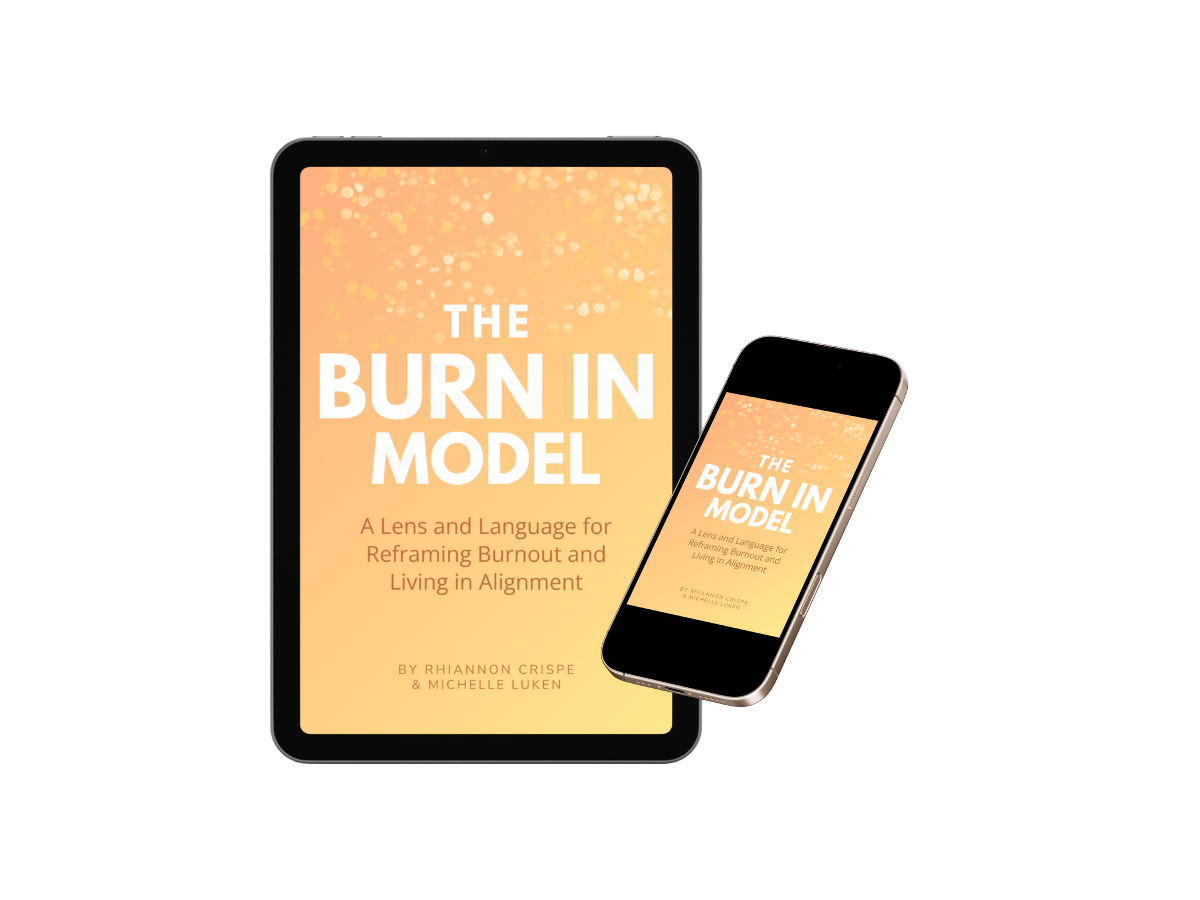
The Burn In Model
A Lens and Language for Reframing Burnout and Living in Alignment
This eBook takes you inside The Burn In Model — exploring the flame, the ecosystem, and examples of how it can be applied. Designed for practitioners, leaders and seekers ready to move beyond burnout, it offers a practical pathway to bring the The Burn In Model philosophy to life in real work, real systems and real change.
Burnout is often framed as an individual failure to cope with stress. The Burn In Model offers a different perspective—one that helps individuals, teams, and organizations understand burnout not as weakness, but as a signal of misalignment between who we are, what we do, and who and what we’re connected to.
Grounded in occupational science, humanism, and ecological systems thinking, The Burn In Model provides a shared lens and language for exploring well-being, engagement, and sustainable participation across work, life, and care.
Using the universal metaphor of fire, The Burn In Model makes complex, often invisible experiences tangible—helping readers name what fuels them, what drains them, and what supports long-term alignment and growth. Designed for both conceptual understanding and an introduction to practical application, this eBook is equally relevant for personal reflection, clinical practice, education, leadership, and organizational development.
What’s included:
A clear overview of The Burn In Model
A nuanced discussion of burnout, its limitations in current definitions, and a reframed understanding grounded in alignment
An introduction to Burn In as a state of sustained alignment and thriving
A detailed breakdown of the Flame and the eight Ecosystem Elements that work together to influence alignment, engagement, and well-being
Practical guidance and case examples for applying The Burn In Model© in various contexts
Visual quick-reference guides included in the appendix for teaching, reflection, and applied use
“I truly believe that The Burn In Model is going to be very impactful in our profession — an ember to occupational therapy that will continue to ignite or reignite the fire in professionals, clients, students and more.”

“
— DR. MARLA DAVIS, PRIVATE PRACTICE OWNER + ASSISTANT PROFESSOR OF OCCUPATIONAL THERAPY
STAY CLOSE TO THE WORK
The Burn In Model Newsletter
Keep exploring The Burn In Model. Get occasional resources, reflections, research, and updates to deepen your understanding of the model and support greater alignment across life and work.
